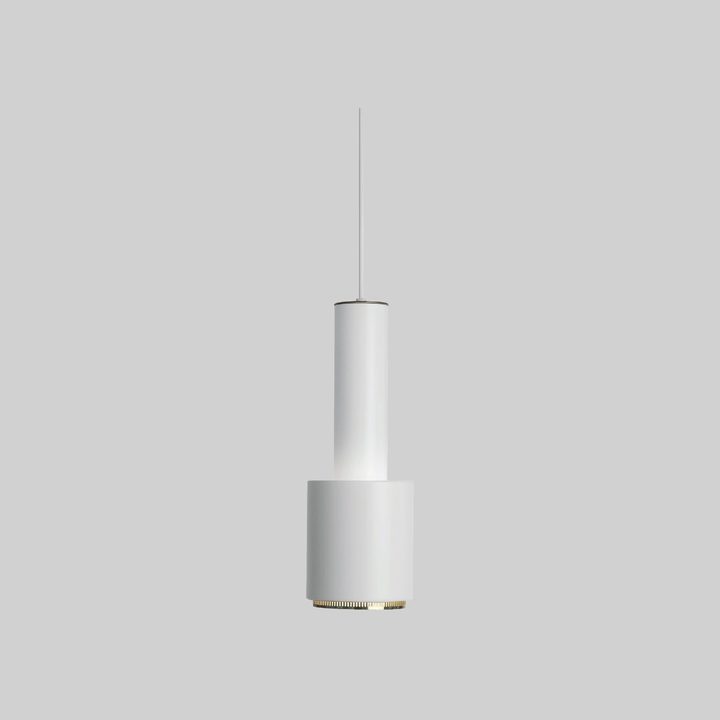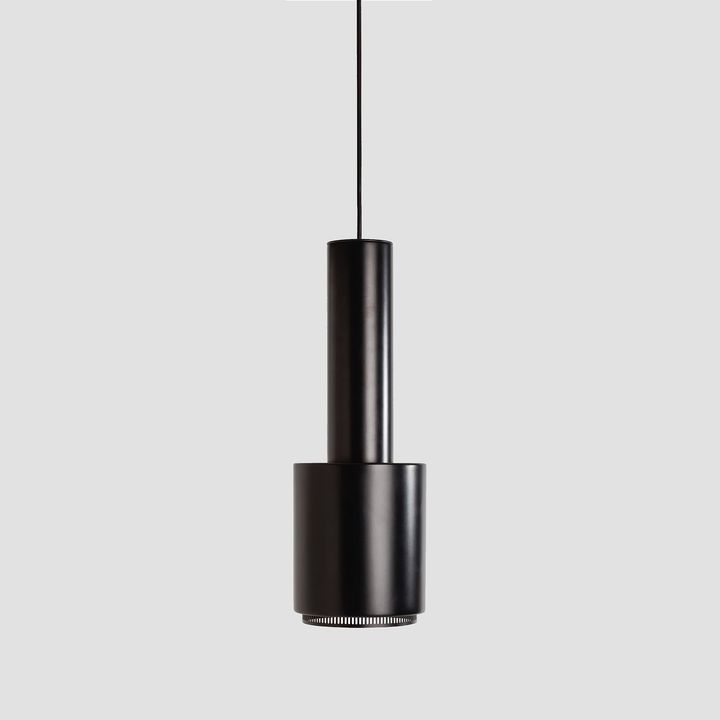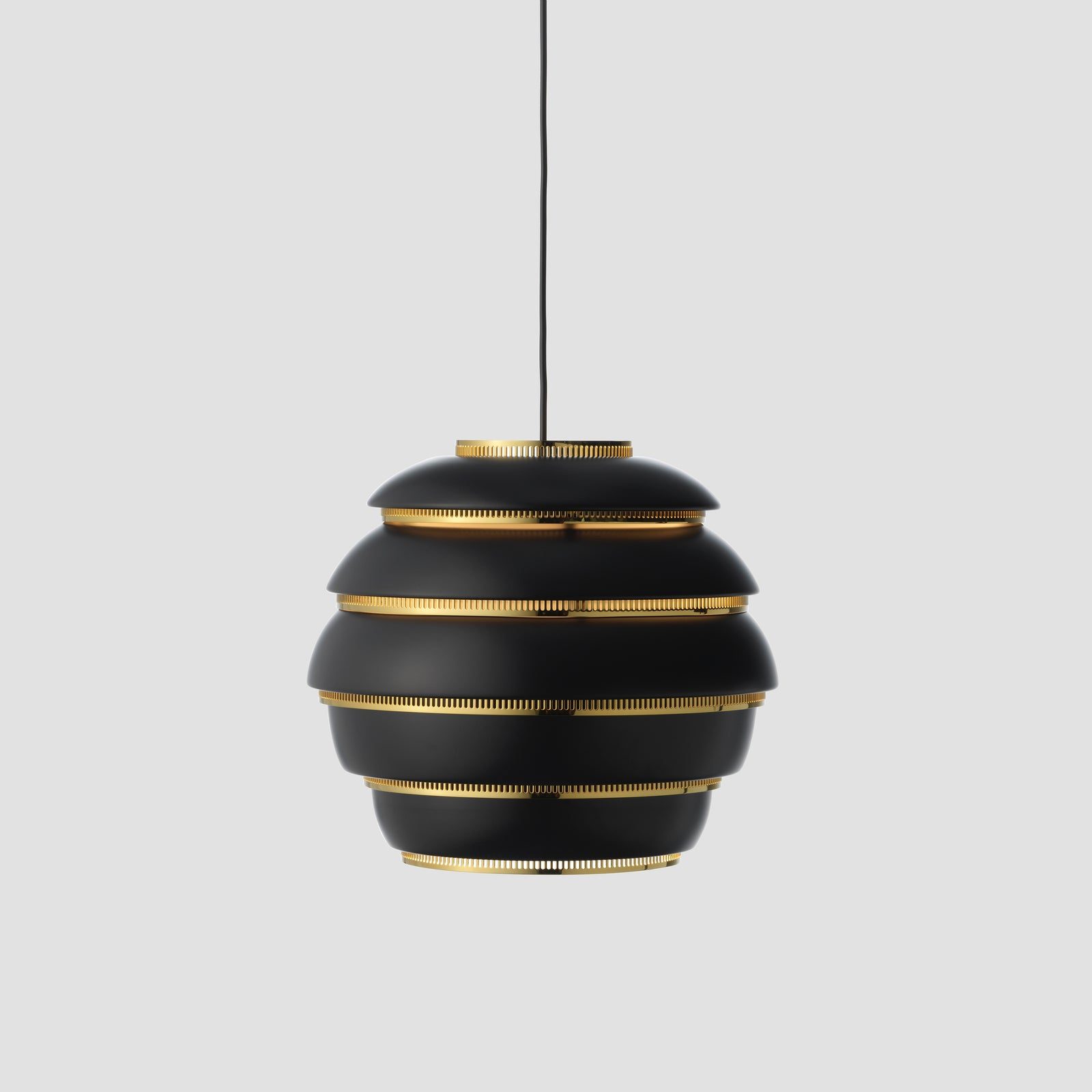
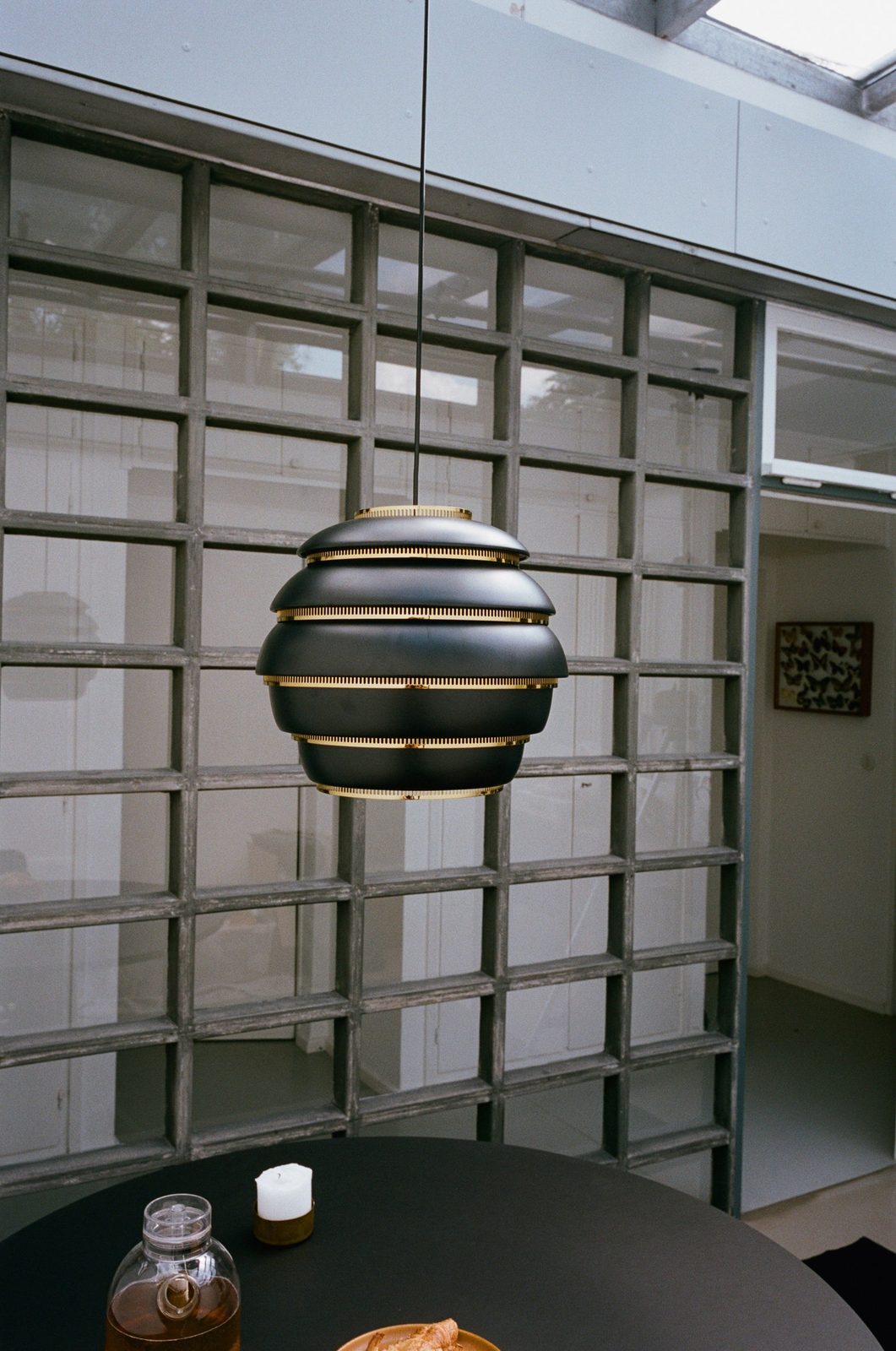
Pendant Lamp A331 "Beehive"
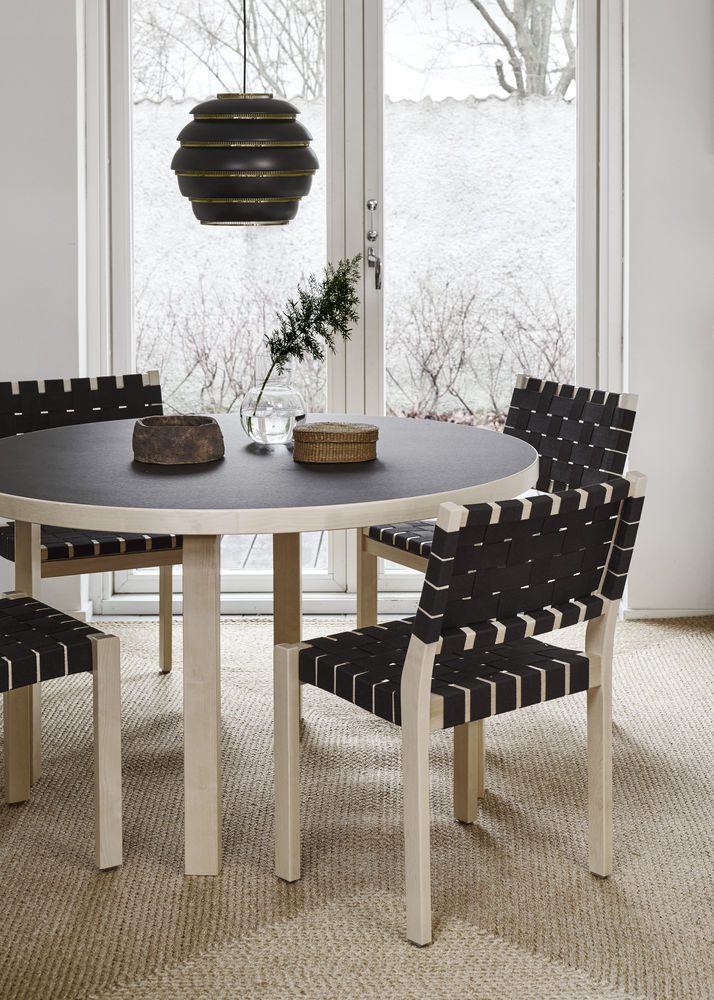
The A331, nicknamed “Beehive,” is one of Alvar Aalto’s most popular lighting designs. Suitable for homes and public spaces alike, “Beehive” creates a warm, diffuse light when switched on, a result of the ingenious design that features several rows of perforated steel rings. True to its nickname, “Beehive” retains its distinctive sculptural presence even when unlit and as originally designed for Finland’s University of Jyväskylä in 1953.
Specification
Proportional drawing from published dimensions. CAD files available on request.
- Shade: Hand-spun aluminium, black powder coated
- Rings: Steel, brass plated
- Cable: Plastic, black



Artek
Artek was founded in Helsinki in 1935 by Alvar Aalto, Aino Aalto, Maire Gullichsen and Nils-Gustav Hahl, to sell furniture and to promote a modern culture of living.
Alvar Aalto
One of the founding figures of modern architecture. With his wife Aino, Aalto designed the furniture for his own buildings, the Paimio Sanatorium and the Viipuri Library. Bending Finnish birch, he gave modernism a warmer, more human material.