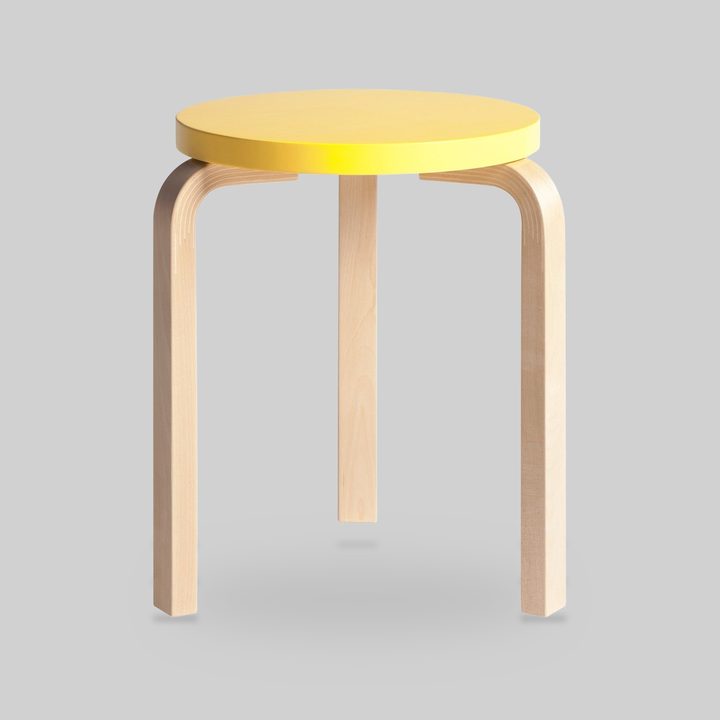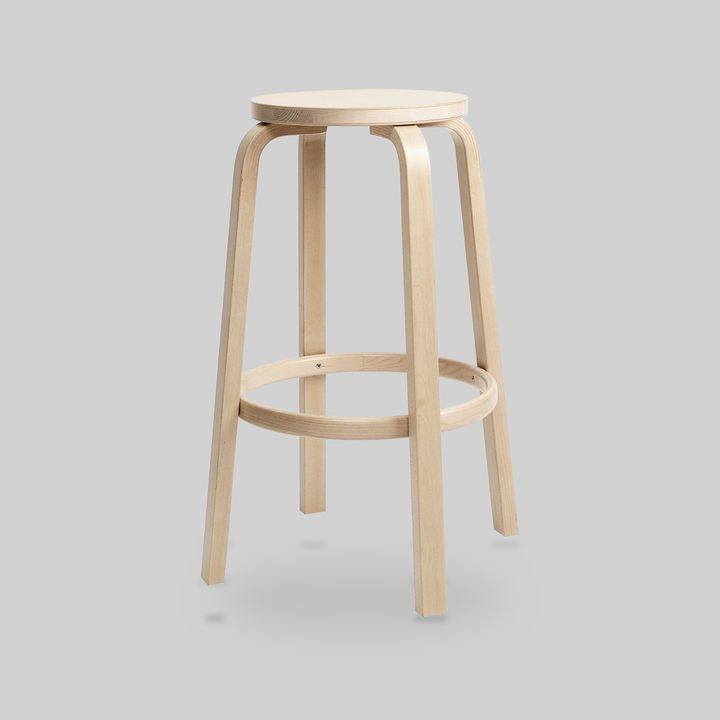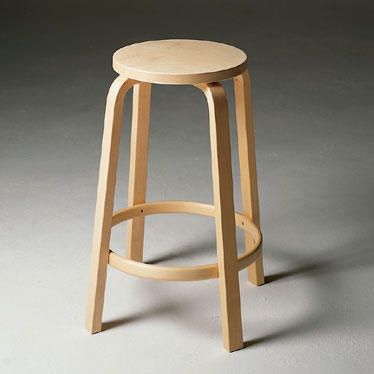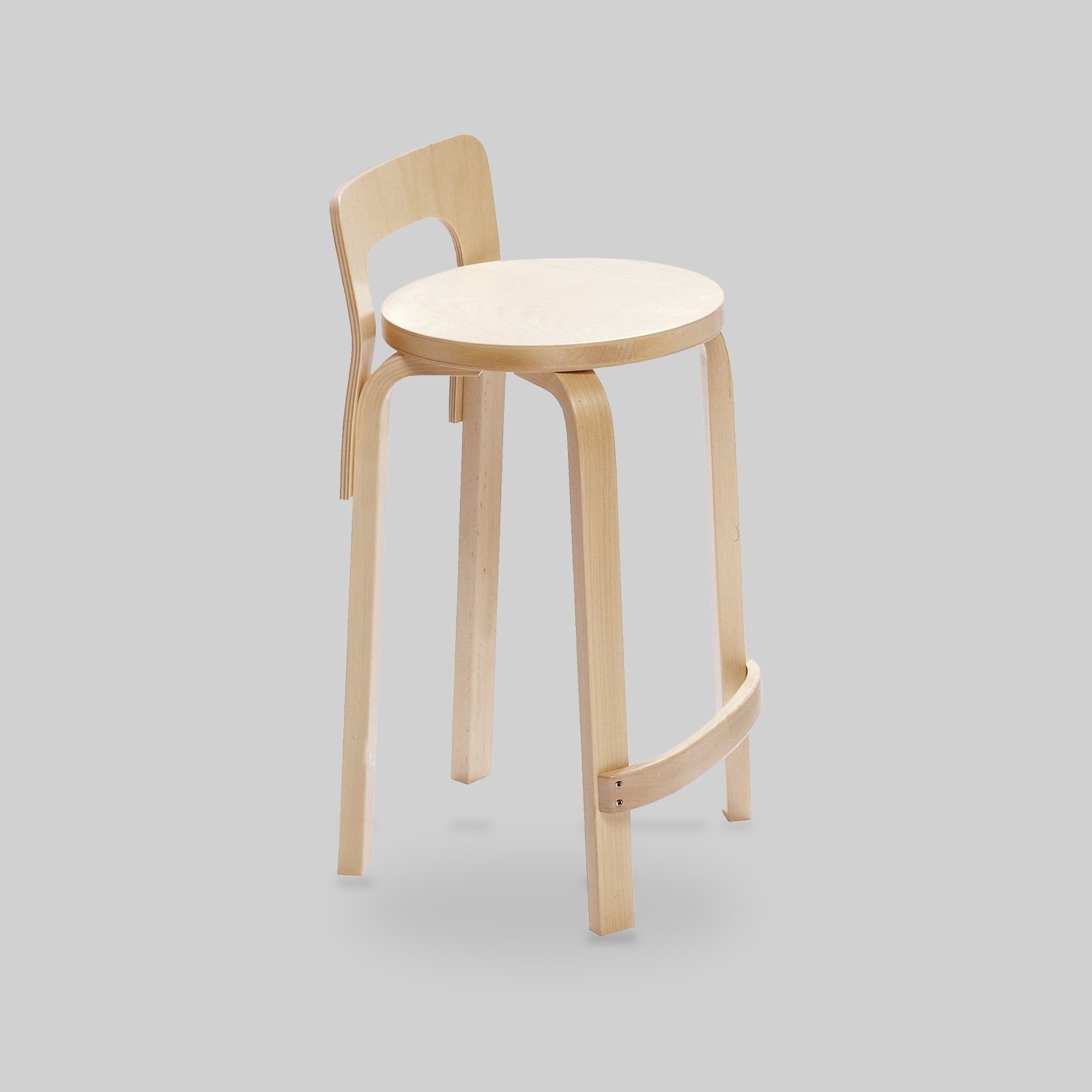
K65 Stool
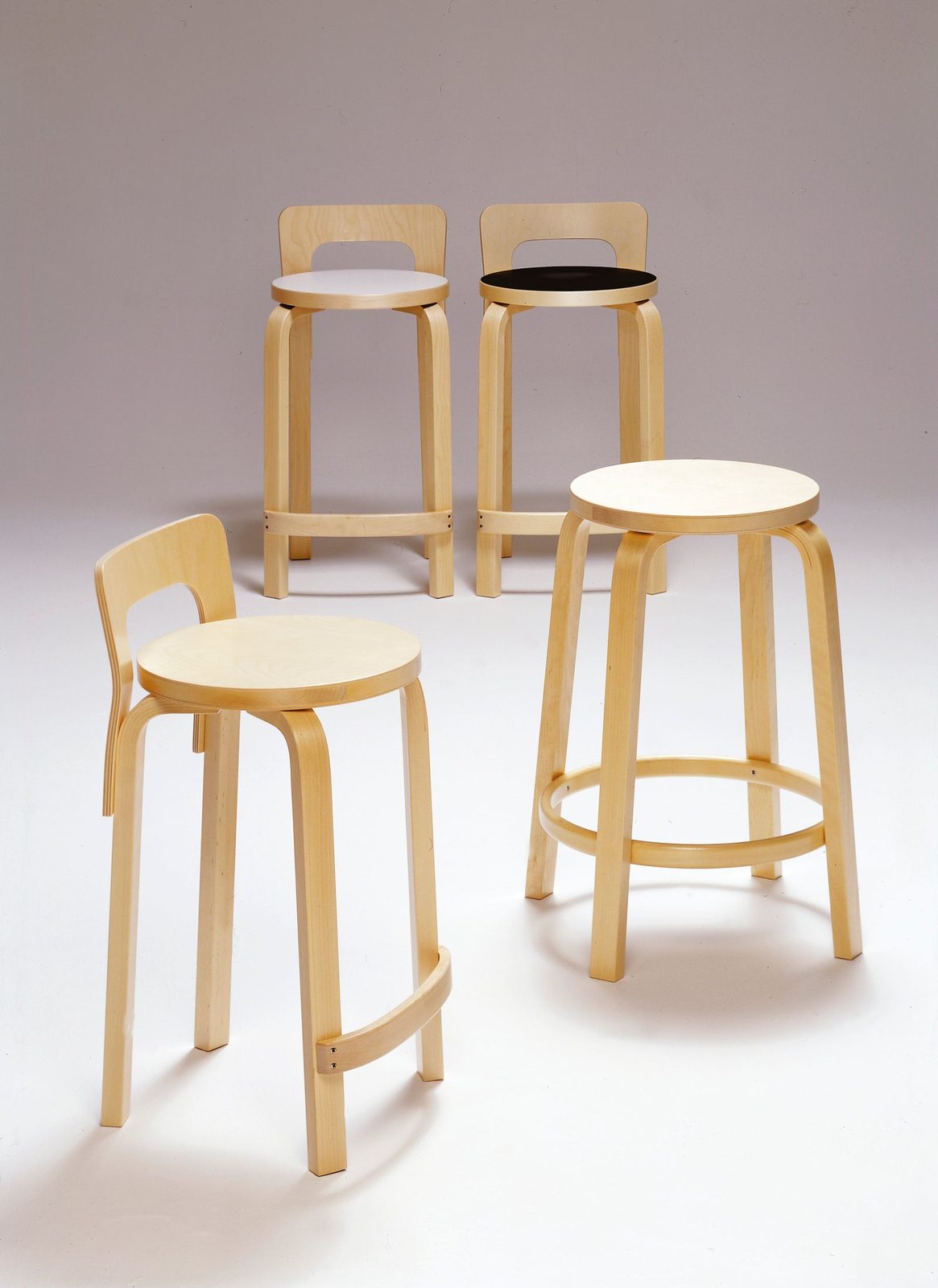
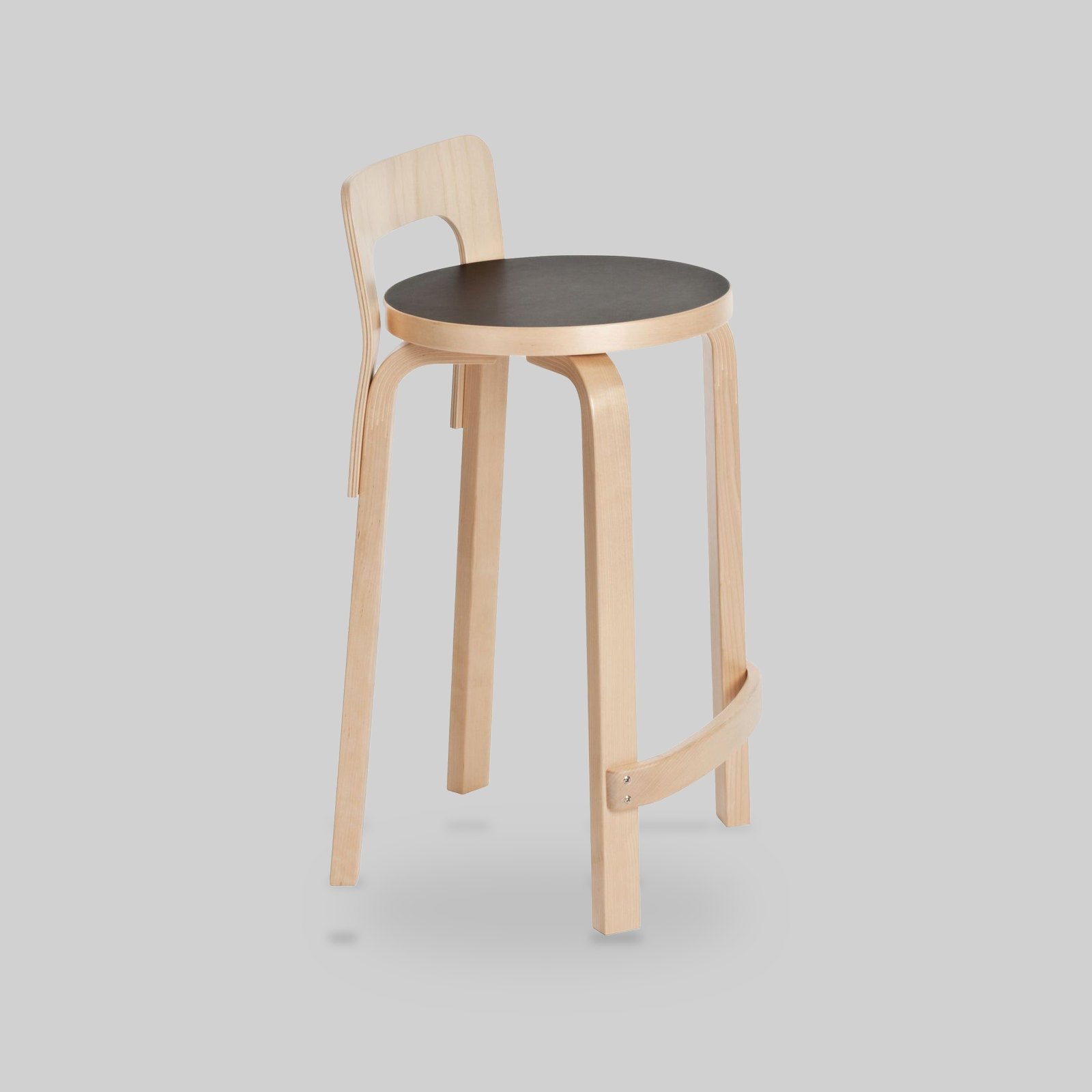
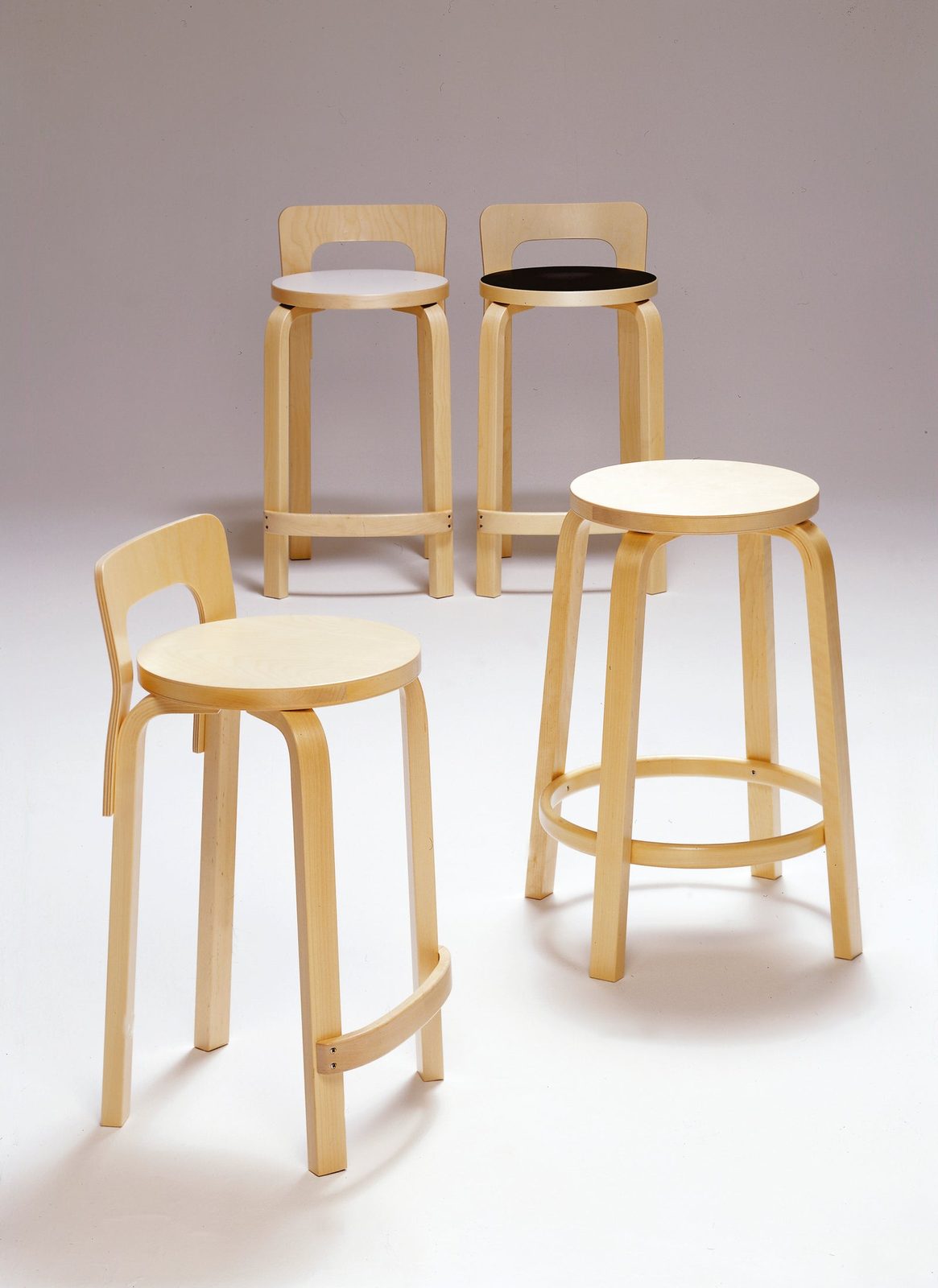
Alvar Aalto's long-legged High Chair K65 is the optimum height for high-top tables and bar counters. Its low seat back offers just the right amount of back support, without diminishing the designs simplicity and pure form. Its curved rail serves as the perfect foot rest. Part of the L-leg collection and created from the original system of standardized components, High Chair K65 has been serving up style and substance since the 1930s.
Specification
Drawn from the maker's CAD model. CAD files available on request.
- Legs and Seat Edge Ban: Solid Birch
- Seat: Birch Plywood, Top - High Pressure Laminate, White
- Backrest: From Pressed Birch Plywood
- Footrest: Form Pressed Solid Birch Lamella
Artek
Artek was founded in Helsinki in 1935 by Alvar Aalto, Aino Aalto, Maire Gullichsen and Nils-Gustav Hahl, to sell furniture and to promote a modern culture of living.
Alvar Aalto
One of the founding figures of modern architecture. With his wife Aino, Aalto designed the furniture for his own buildings, the Paimio Sanatorium and the Viipuri Library. Bending Finnish birch, he gave modernism a warmer, more human material.