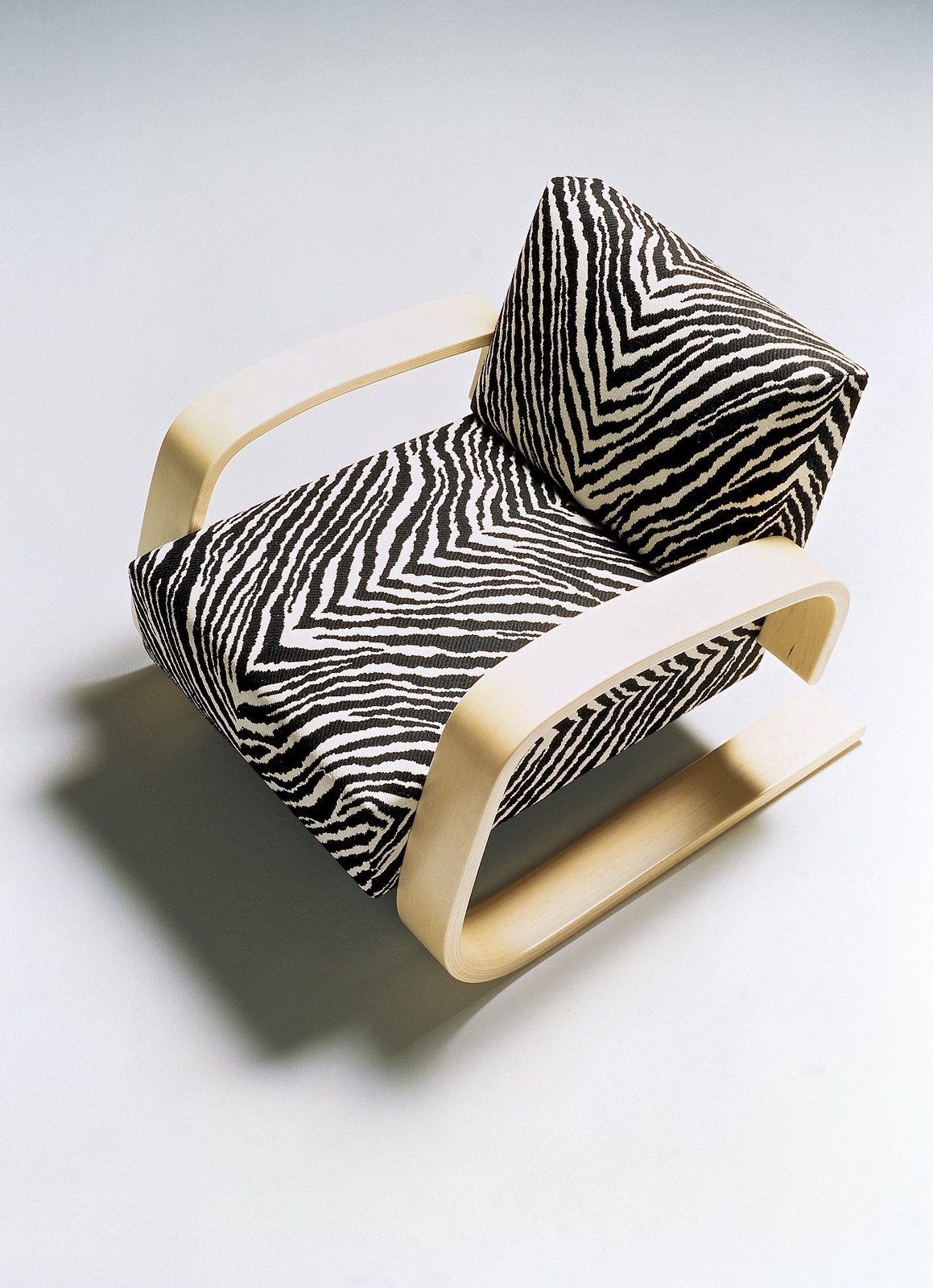
400 'Tank' Chair
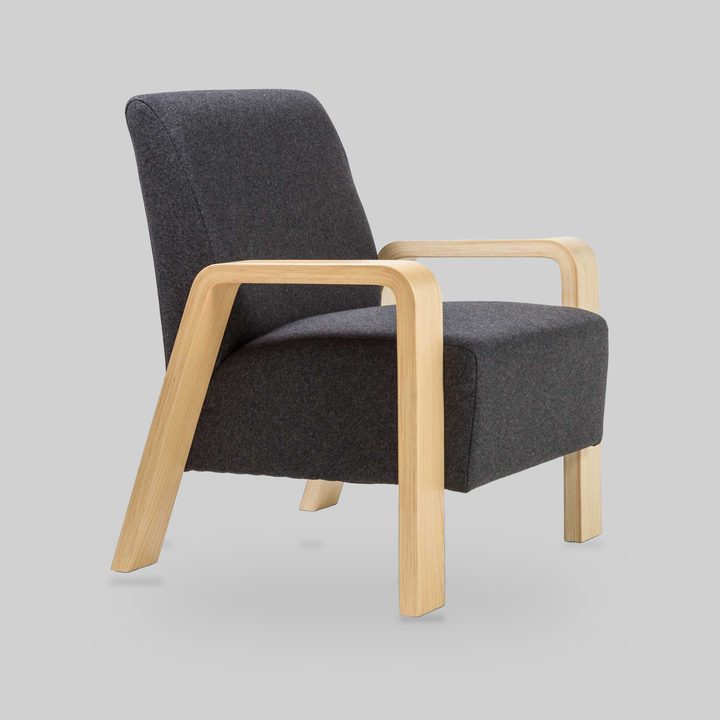
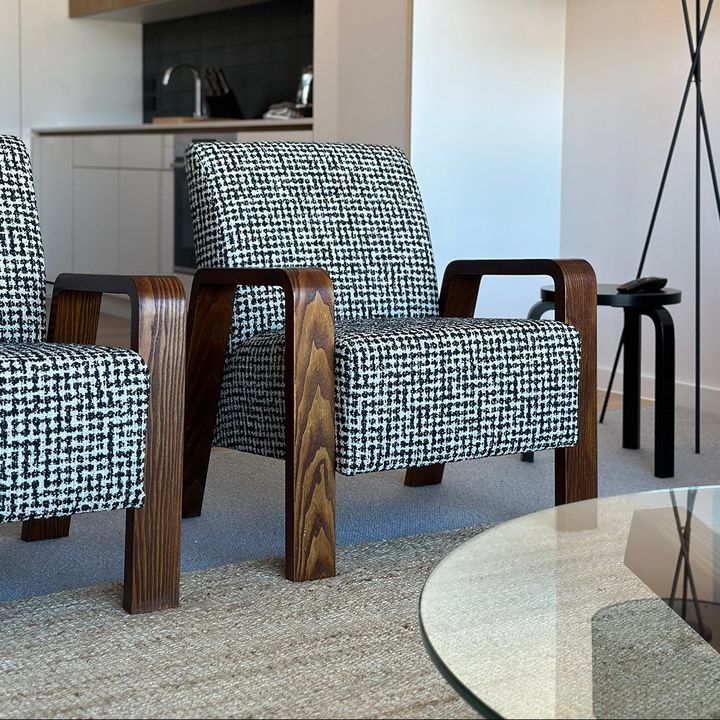
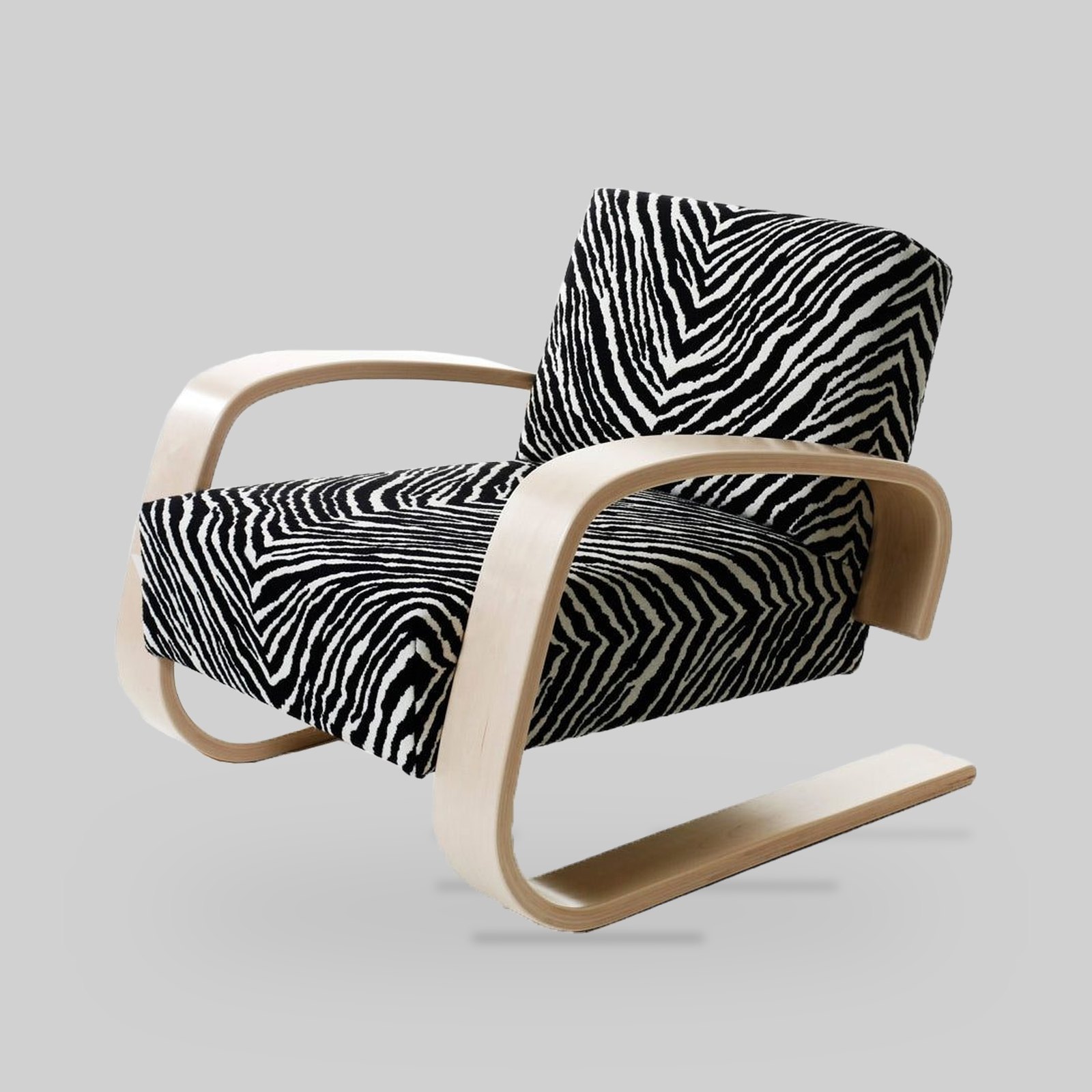
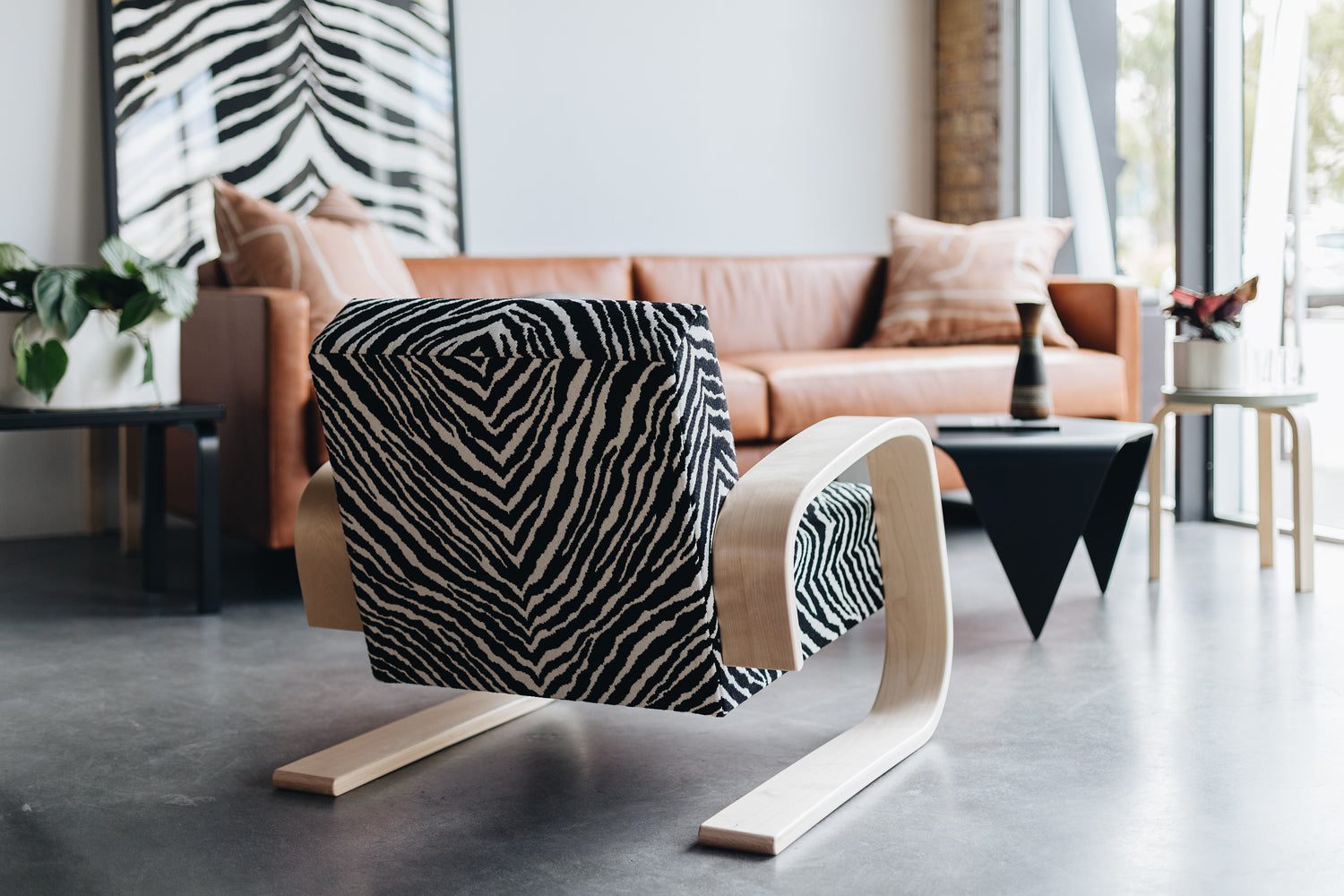
At the Milan Triennial in 1936 Aalto unveiled his design for an easy chair that deviated sharply from earlier models. Its wide, sturdy armrests are of bent wood. It is a low-slung and heavy, solidly shaped easy chair. Perhaps for that reason the chair received its "tank" nickname. This handsome chair is unique within the context of Aalto's extensive output.
Specification
Drawn from the maker's CAD model. CAD files available on request.
- Birch, natural lacquered
- Seat with no-sag springs, PU foam and dacron
- Upholstery in Artek Zebra: Wool/Cotton.
- Options: Also available in Artek's standard fabrics and leathers or custom fabric or leather
Artek
Artek was founded in Helsinki in 1935 by Alvar Aalto, Aino Aalto, Maire Gullichsen and Nils-Gustav Hahl, to sell furniture and to promote a modern culture of living.
Alvar Aalto
One of the founding figures of modern architecture. With his wife Aino, Aalto designed the furniture for his own buildings, the Paimio Sanatorium and the Viipuri Library. Bending Finnish birch, he gave modernism a warmer, more human material.